

Every day, currencies rise and fall as global economies react to news, policy decisions, along with numerous market sentiments. Behind these movements aren’t only large banks and institutions, but also thousands of individual traders participating in the market. Now, this is exactly where retail forex trading comes in.
If you ever wondered what is retail forex trading and how everyday traders analyze the movement of currency, place trades, and handle several risks, understanding the basics is truly essential.
With the help of numerous modern retail forex trading platforms, you can access the market and apply structured retail forex trading strategies. In this guide, we’ll break down how retail forex trading works, the key strategies traders utilize, and some practical guidelines that really help traders approach the forex market with greater clarity and discipline.
What Is Retail Forex Trading?
Retail forex trading simply means individuals buying and selling currency pairs in the foreign exchange market through the medium called online brokers. Rather than large banks or any financial institutions, everyday traders participate through retail forex trading platforms that provide comprehensive charts, numerous trading tools, and order execution.
These brokers/platforms act as intermediaries, and allow individuals in order to access the forex market and trade currencies such as EUR/USD directly from their computer or even mobile device.
How Retail Forex Trading Works?
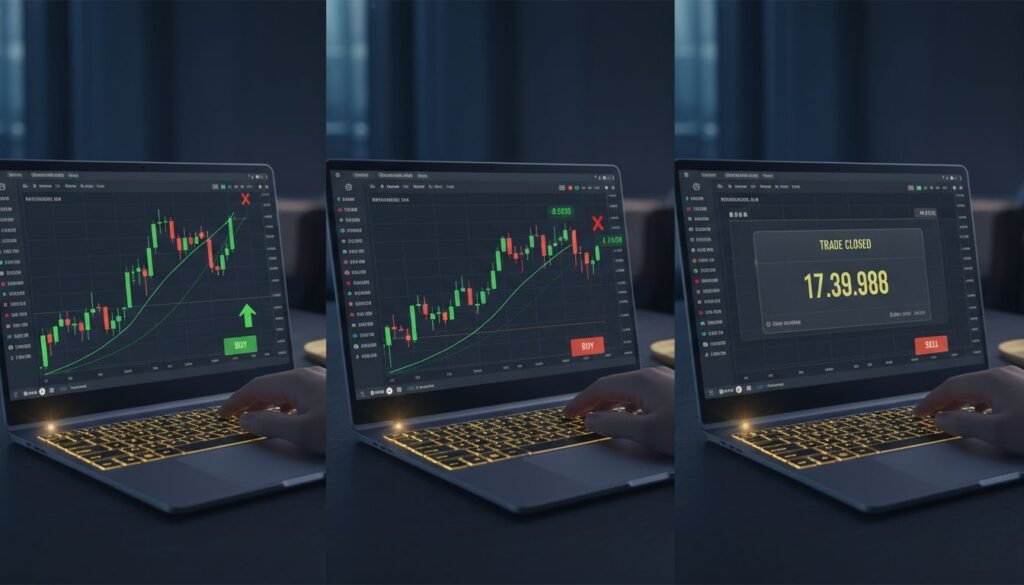
Retail forex trading actually allows you to participate in the global currency market as it speculates on the price movements of the various currencies. Instead of exchanging money for travel or business purposes, traders aim to profit from variations in exchange rates. With the help of retail forex trading platforms, you can analyze charts, study trends of the market, and place buy or sell orders through your broker. Once a trade is opened, the position is tracked, and the later is closed whenever the trade reaches a profit target or decides in order to exit on market conditions.
Currency Pair Trading

In forex trading, currencies are always traded in pairs as one currency is exchanged for another. Among the most common currency pair retail trading platforms forex traders primarily focus on are EUR/USD, GBP/USD, as well as USD/JPY.
- EUR/USD: This is actually the most traded currency pair globally, and is known for strong liquidity and relatively stable price movements.
- GBP/USD: Mostly more volatile, which can create larger trading opportunities.
- USD/JPY: This currency pair is popular because of its high liquidity and strong influence on global economic news.
Liquidity means how easily a currency can be bought or be sold in the market. Highly liquid pairs generally have lower spreads, which is the difference between the buying and selling prices. And, lower spreads lessen trading costs and ultimately make it really easier for traders to enter and exit positions efficiently.
Retail Forex Trading Platforms
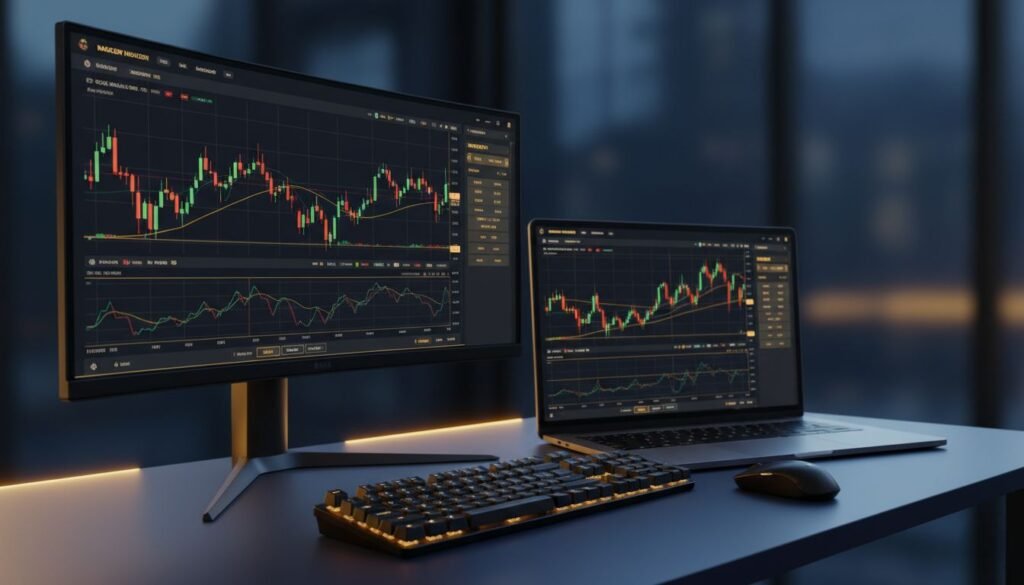
The tools that enable individual traders to analyze the market and trade via online brokers are referred to as retail forex trading platforms. These are platforms that integrate market information, trading technology, and order implementation capabilities in order to enable traders to efficiently handle their operations. Here’s more about them:
Broker Platforms
The forex trading platforms that link the traders to the forex market are offered by the online brokers. These websites enable users to open trading accounts, track price changes, and buy or sell.
Charting Tools
Most systems also have powerful charting options that enable traders to analyse price movements. Traders are able to use technical indicators, plot support and resistance levels, and use past price data so as to see the potential trading opportunities.
Order Execution
Traders can place orders on the platform once they have identified a trading opportunity. This will involve making buy or sell orders, the establishment of stop-loss points to control risk, and the establishment of take-profit lines to guarantee possible gain.
Core Strategies Used in Retail Forex Trading
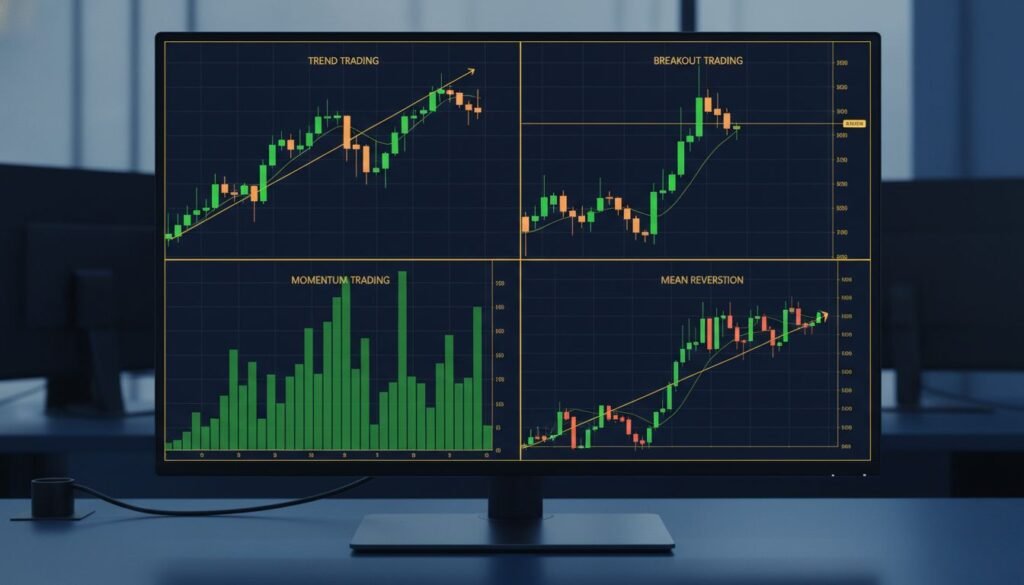
In order to trade successfully, people tend to apply the already tested retail forex trading strategies that can assist in finding openings on the market. These are strategies that aim at examining price trends, market momentum, and undertake systematic trading decisions.
Trend Trading
This is a directional strategy in terms of trading with the general market direction. For example, when EUR/USD has a constant upward trend, a trader can purchase the pair in the expectation that the trend will be sustained.
Breakout Trading
Traders come into the market after the price breaks a significant level of support or resistance. When GBP/USD crosses a strong resistance level, the traders can buy, anticipating future movement.
Momentum Trading
Momentum trading targets price movements that are strong and in the short term.
Example: When USD/JPY is increasing at a high rate with intense buying power, traders can acquire it to enjoy the trend.
Mean Reversion
The strategy that is used is that prices do revert to the average following extreme actions.
Example: Whenever a currency pair is oversold, a trader would sell in anticipation that the price would revert to its average.
10 Practical Guidelines for Retail Forex Trading
Successful trading requires more than just understanding what is retail forex trading. Consistent results come from discipline, risk control, and a structured approach. These practical guidelines help traders apply effective retail forex trading strategies and make better decisions in the currency market.
Trade With a Well-established Strategy
Retail forex trading strategies should be properly structured, and all traders are expected to trade in a systematic manner as opposed to trading in a haphazard manner. The clear strategy assists in discovering arrangements, keeping discipline, and arriving at regular trading decisions through analysis.
Adhere to Risk Management Strictly
Risk management safeguards trading capital against huge losses. Effective traders predetermined stop-loss positions, good position size, and each trade is carried out in accordance with a systematic risk management stipulation.
Risk Not too Much Capital
Professional traders do not run the risk of putting too much on one trade. Getting exposure to a small percentage of the account balance will allow traders to endure any losing streak and keep being active in the marketplace longer.
Have a Favorable Risk-Reward Ratio
Smart traders concentrate on trading in which there is a larger possible reward than there is a possible loss. The existence of a good risk-reward ratio will enable the traders to make profits even when not all trades are profitable.
Target Price Action and Market Structure
Price action assists traders in coming up with the behavior of the market. The analysis of support, resistance, and trend structure enables traders to know when to open a door without having to over-depend on complex indicators.
Keep off the Systems of Recovery which are High-Risk
Trading systems like martingale expand the trade following losses and may demolish trading accounts. Responsible retail forex trading is more about discipline rather than gambling-like recovery strategies.
Trading in the Active Trading Sessions
When the key financial markets open, liquidity and volatility are enhanced. London or New York trading can be a better place to trade because of increased trading in major currency pairs.
Use a Pre-Trade Checklist
Before traders get into trades, they are studied by professional traders. Trend direction, key levels, economic news, and risk-reward setup are the basis of a decision to check as opposed to acting on an impulse.
Keep a Record of Your Trading
Documenting every trade aids traders in reviewing their performance. A journal records entry points, exit decisions, and emotional behavior, and assists the trader to improve their retail forex trading strategies with time.
Keep on Enhancing Your Trading Structure
The forex market is dynamic. The traders who frequently review the previous trades, refine the strategies, and enhance their trading structure will have a higher probability of developing long-term consistency and making better decisions.
Conclusion
Retail forex trading has provided people with the chance to trade in one of the busiest financial markets in the world, and can only make it when they know, are disciplined, and approach it in the right way.
Learning the meaning of retail forex trading, effective retail forex trading strategies, and systematic instructions are the factors that can help traders make informed choices. Forex traders can bring a more rational approach to the market through risk management, market research, and ongoing education, and create a more sustainable trading system in the long run.
